The Complete Guide for Parents: Slowing Nearsightedness with Glasses (Myopia)
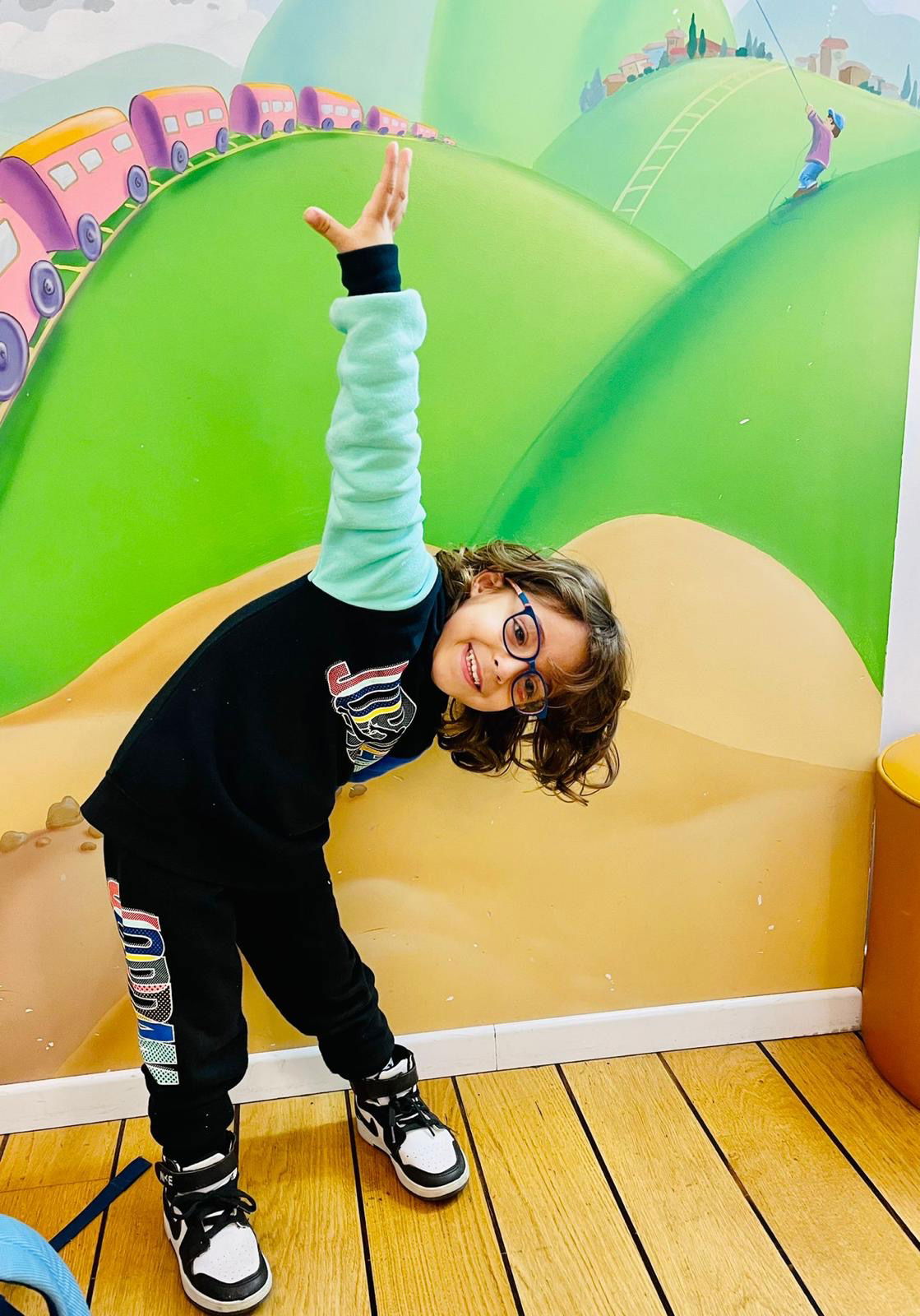
Myopia in ChildrenThe light (but serious) guide every parent needs Let's start with the less good news: myopia (nearsightedness) in children is not just "another number on the glasses prescription". The good news? Today there are real, research-based tools that can slow its progression – not just correct it. And that's exactly what we'll tell you about here.
Wait, Why Fight Myopia at All?
In a nearsighted child, the eye simply "elongates" too much with age. The problem isn't only that they'll need stronger glasses over the years. A longer eye carries a higher risk in adulthood of serious vision problems – retinal detachment, glaucoma, macular degeneration. So when we talk about "Myopia Management", the goal is not only to see well today, but to protect eye health for decades to come.
How Can a Lens "Slow" Myopia at All?
This is the cool part. Regular lenses correct only the center of the visual field. But it turns out that when light falls incorrectly around the center of the retina, it gives the eye a "signal" to keep elongating. Myopia management lenses are designed to create controlled blur (defocus) in the periphery of the visual field – as if telling the eye "you're fine, you don't need to grow anymore". The result: a slower rate of elongation, and a prescription that stabilizes sooner.
Who Are the Leading Players in the World? (And You'll Find All of Them at Optikid)
HOYA MiYOSMART Probably the most talked-about lens in the world. Based on D.I.M.S technology (Defocus Incorporated Multiple Segments), and developed in collaboration with the Hong Kong Polytechnic University.
- 52% less prescription progression and 62% less eye elongation, in a two-year clinical study (183 children aged 8–13)
- A six-year follow-up showed the effect is maintained over time, with no "rebound" effect when use stops
- One of the lenses with the most years of research and data behind it in the world
MYOSLOW An Israeli lens (by Crystal Optic of Acre), also based on the principle of peripheral defocus.
- A randomized controlled trial at Sheba Medical Center, in 121 children aged 6–12
- 23.6% less eye elongation in the first year of follow-up
- Developed and tested on the local population too – an advantage for parents in Israel
CooperVision MiSight Here we move from spectacle lenses to daily contact lenses. Suitable for children who are already mature enough to put in and take out contact lenses themselves.
- The longest-established lens in the field in terms of research data – follow-up of up to 7 years
- After three years: a 59% reduction in prescription progression and 52% in eye elongation, compared with regular contact lenses
- About 90% of treated eyes responded positively to treatment
ZEISS MyoCare A relatively new spectacle lens, based on C.A.R.E technology (Cylindrical Annular Refractive Elements).
- In two-year clinical studies (both Asian and European children): a reduction of about 45-48% in prescription progression
- A reduction of about 34-41% in the rate of axial elongation, compared with regular glasses
- Only about 14-17% of the children experienced fast progression, compared with 51% in the control group – a significant reduction in the risk of severe cases
Optime Another option available among our solutions. It's worth asking the professional team at Optikid about its specific suitability for your child – each lens has an age range and prescription range in which it is most effective.
More Lenses Worth Knowing
HOYA MiYOSMART iQ – the new generation of MiYOSMART: the focusing segments are closer to the center of the lens, and the peripheral focusing power is higher. In a 12-month trial in Hong Kong, in about 200 children aged 4–12 (presented at ARVO 2026), the prescription on average did not increase during the year.
Essilor Stellest – 1,021 tiny microlenses in 11 rings around a clear center (HALT technology). In a trial in China (JAMA Ophthalmology, 2022; 157 children aged 8–13), about 55% less progression and about 51% less eye elongation were found. In an American trial (2026; 159 children aged 6–12), 71% less progression was found.
CooperVision MiSight Spectacle Lenses – the spectacle lens by CooperVision, the company behind MiSight contact lenses. It works differently: thousands of tiny dots scatter light and reduce contrast on the retina. In a trial in China (186 children aged 6–13, two years), 67% less progression and 62% less eye elongation were found.
Shamir Optimee – an Israeli lens with a clear vertical zone in the center and peripheral focusing on the sides. In a trial in Israel led by Prof. Yair Morad (126 children aged 6–13), 43% less eye elongation was found in the first year, in children under age 10.
IOT MyoLess – a lens by the lens manufacturer IOT, with asymmetric peripheral focusing on the back surface of the lens. No controlled trial has been published on it yet.
A full comparison of all the lenses, with links to the studies, can be found on the page Glasses to Slow Myopia – Lens Comparison.
So How Do You Choose?
There is no "one lens that wins for everyone" – the choice depends on the child's age, the strength of the prescription, the rate of progression, and even lifestyle (a very sporty child may be better suited to glasses, a more independent child can handle contact lenses). This is exactly where individual fitting with an optometrist who specializes in myopia management makes all the difference.
The Next Step
If your child's glasses prescription goes up year after year, it's time for a dedicated exam – not just a "regular eye exam",
but measuring the length of the eye and monitoring myopia. Come for an exam at Optikid, and together we'll find the most suitable solution.
Frequently Asked Questions
At what age can you start with glasses to slow myopia?
In most cases you can start at a relatively young age, as soon as myopia has been diagnosed and there is concern about fast progression. The decision is made with the optometrist after a comprehensive exam.
Do these glasses look different from the outside?
No. From the outside, most spectacle lenses for slowing myopia look exactly like regular lenses. The difference is in the lens's optical design, not its appearance. The exception is MiSight lenses.
Do the lenses need to be replaced every time the prescription changes?
Yes, as with any other lens. If the prescription changes, new lenses are fitted to the updated prescription.
Does the health fund benefit also apply to these lenses?
Benefit coverage varies between health funds. We recommend checking with your nearest branch about how it applies to your prescription.
How many hours a day should the child wear the glasses?
The general recommendation is consistent wear for most of the day, including during school and in front of screens, and not only at certain times.