Myopia in children, 10 steps to slow down the progression in daily routine
Myopia in children, why it happens and why it is important to act early
Myopia in children, or by its professional name myopia, is a condition in which a child sees well up close but has difficulty seeing far away. Sometimes this manifests itself in a classroom blackboard that appears blurry, difficulty recognizing friends from a distance, squinting at screens, or closing one eye to sharpen. In recent years, there has been a clear increase in the prevalence of myopia worldwide, and it is attributed to a combination of genetics and environment, and mainly a decrease in time outdoors and an increase in time in front of screens and close tasks.
What is important to understand is that myopia is not just a matter of a number on your glasses. In some children, myopia progresses rapidly throughout childhood and adolescence, and the higher the number, the higher the risk of eye problems in later life. Therefore, the goal is not only to see well today, but also to slow the rate of progression as much as possible over the years.
The Optickid Optics for Children network was established with the understanding that children are not small adults. Habits, motivation, adaptation to glasses, attention span, concerns, and the ability to cooperate in examination and follow-up are all different. To succeed in slowing myopia in the daily routine, you need a clear, simple, measurable plan, and most importantly, one that is tailored to the child and the family.
Before we begin, an important note: This article is for general information only and is not a substitute for medical advice. It is important to have regular eye exams with an optometrist, and in some cases, follow-up with an ophthalmologist, especially if you have strabismus, lazy eye, pain, recurrent infections, or sudden vision loss.
10 steps to slow down progress in your daily routine
- Step 1, Building a Foundation: Regular Vision Exam, Diagnosis, and Consistent Follow-up
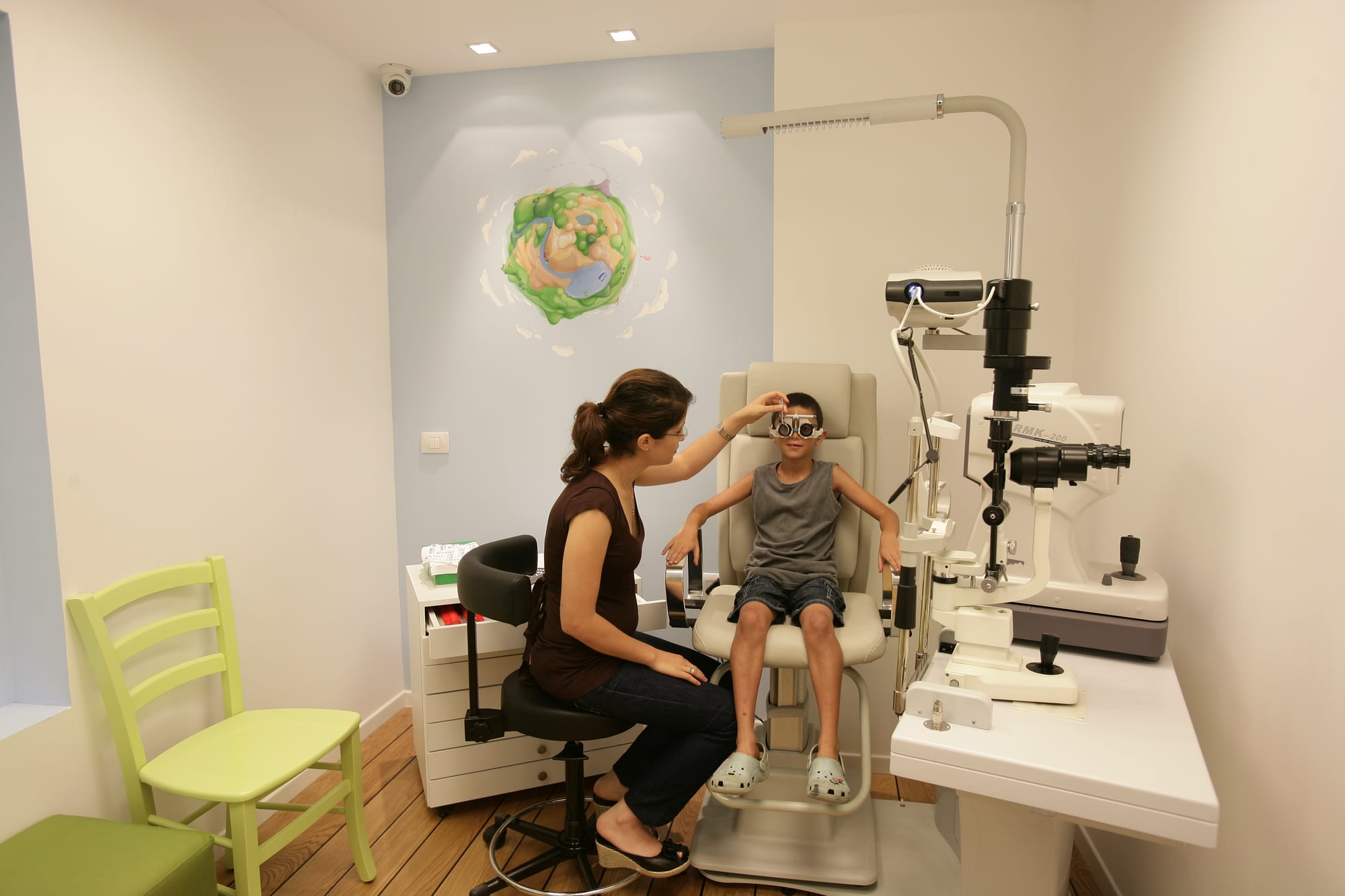
The first step is to make sure we know what the real situation is. Children can compensate for blurring over time, so sometimes parents only discover the problem when the child is already having trouble in school or complaining of headaches. A professional examination provides a starting point for measurement, and also allows us to decide whether a means of slowing down is needed beyond regular glasses.
What to do in practice in your daily routine:
- Schedule a complete vision exam with an optometrist experienced in children, including a test of distance and near visual acuity, a cylinder test, balance between the eyes, and an assessment of visual function.
- Ask what the previous number was and what the change has been since then, over what time frame, and what is considered a significant rate of progress for the age.
- Coordinate the frequency of follow-up, sometimes every six months and sometimes every year, according to the rate of change and the recommendation of a professional.
- Document at home, a photo of the prescription, date, and additional metrics if given, to identify patterns over time.
Why is it a “mat”? It’s not a “mat” in itself, but without measurement there is no con